What Is Proof Of Work? Understanding Bitcoin's Security System
Proof of Work is one of the most important technologies behind Bitcoin. It is the mechanism that allows a decentralized network of computers to agree on transaction history without relying on a central authority.
Crypto AI Trend · 7 min read

On this page
When people discuss Bitcoin mining, network security, or blockchain validation, they are ultimately talking about Proof of Work.
Although the concept can seem complex at first, Proof of Work is actually a straightforward solution to one of the biggest challenges in digital money: how to create trust between participants who do not know or trust each other.
This guide explains what Proof of Work is, how it works, why Bitcoin uses it, and why it remains one of the most debated topics in cryptocurrency.
What Is Proof Of Work?
Proof of Work (PoW) is a consensus mechanism used by Bitcoin and some other cryptocurrencies.
A consensus mechanism is a system that allows all participants in a decentralized network to agree on which transactions are valid.
Proof of Work achieves this by requiring participants known as miners to perform computational work before they can add new blocks to the blockchain.
The work itself is difficult to perform but easy for the rest of the network to verify.
This simple idea forms the foundation of Bitcoin's security.
Why Does Bitcoin Need Proof Of Work?
Before Bitcoin was created, digital money faced a major problem known as the double-spending problem.
Imagine a digital coin that could be copied infinitely.
Without a trusted central authority, how could users verify that the same coin had not already been spent elsewhere?
Bitcoin solved this problem through blockchain technology combined with Proof of Work.
The network collectively agrees on a single transaction history, making double spending extremely difficult.
How Proof Of Work Works
At a high level, the process follows these steps:
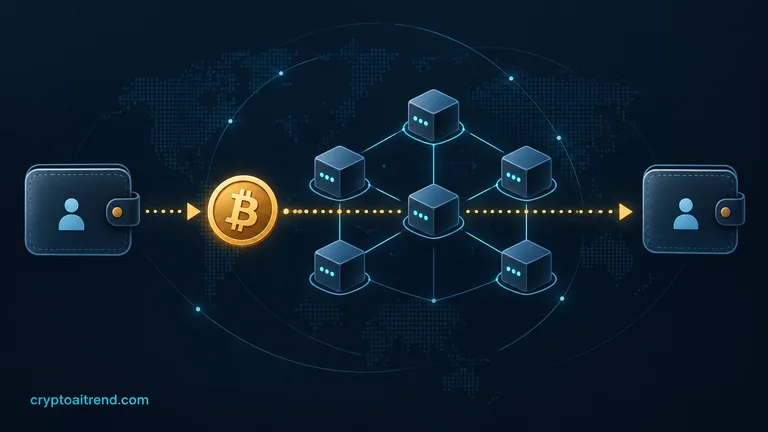
Step 1: Transactions Are Created
Users send Bitcoin transactions to the network.
Step 2: Miners Collect Transactions
Miners gather valid transactions into a candidate block.
Step 3: Miners Compete
Miners attempt to solve a complex mathematical puzzle.
This process requires computational power and electricity.
Step 4: A Winner Is Found
The first miner to solve the puzzle earns the right to add the block to the blockchain.
Step 5: The Network Verifies The Block
Other participants verify the solution.
If valid, the block becomes part of the blockchain.
Step 6: The Process Repeats
The cycle continues approximately every ten minutes.
What Puzzle Do Miners Solve?
The puzzle is based on cryptographic hashing.
Miners repeatedly calculate a mathematical function while changing certain inputs.
Their goal is to find a result that meets specific difficulty requirements.
The process involves trial and error.
There is no shortcut.
The only way to succeed is through computational work.
This is where the name Proof of Work comes from.
The miner proves that computational resources were expended.
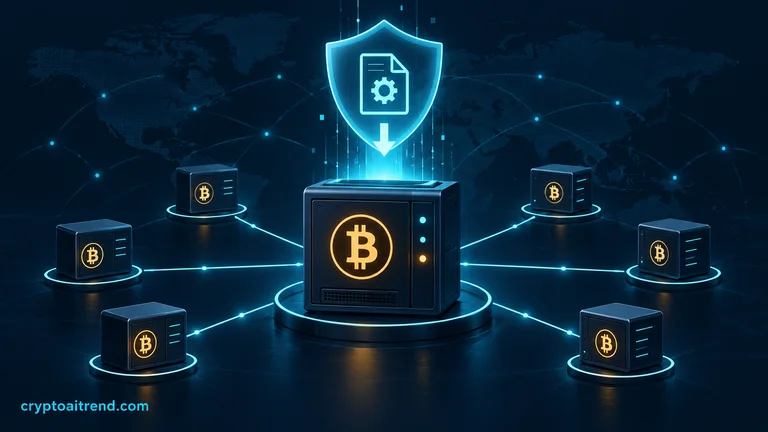
Why Is Proof Of Work Secure?
Proof of Work creates security through cost.
To attack the network, an attacker would need enormous computational resources.
This would require:
- Specialized hardware
- Massive electricity consumption
- Significant financial investment
Because attacks are extremely expensive, honest participation becomes economically attractive.
The larger the Bitcoin network becomes, the more secure it generally becomes.
What Is Bitcoin Mining?
Bitcoin mining is the process of performing Proof of Work.
Miners use specialized computers called ASICs to compete for block rewards.
Mining serves several important purposes:
- Verifying transactions
- Securing the network
- Maintaining decentralization
- Distributing new Bitcoin
Without miners, Bitcoin could not function.
Why Do Miners Participate?
Miners receive rewards for securing the network.
These rewards consist of:
Block Rewards
Newly created Bitcoin issued by the protocol.
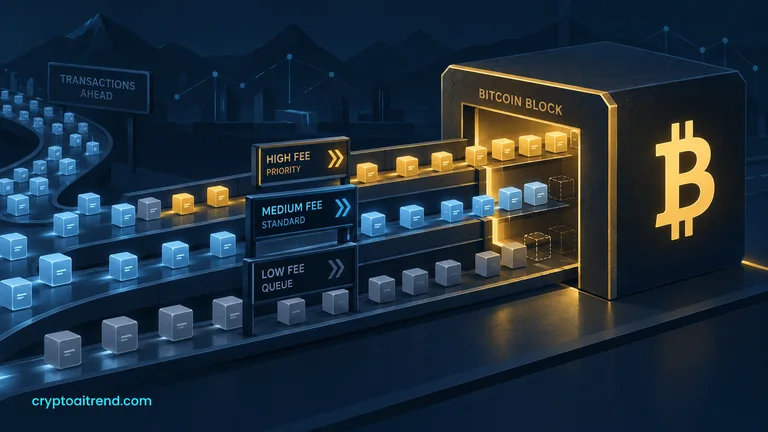
Transaction Fees
Fees paid by users who send transactions.
Together, these incentives encourage miners to maintain and secure the network.
What Is Mining Difficulty?
Bitcoin automatically adjusts mining difficulty.
If miners add blocks too quickly:
- Difficulty increases.
If blocks are added too slowly:
- Difficulty decreases.
This adjustment mechanism helps maintain Bitcoin's target block time of approximately ten minutes.
The result is a predictable and stable issuance schedule.
What Is Hash Rate?
Hash rate measures the total computational power securing the Bitcoin network.
A higher hash rate generally indicates:
- More miners
- Greater security
- Increased network resilience
Hash rate is often viewed as one of the most important indicators of Bitcoin network strength.
Why Is Proof Of Work Decentralized?
Anyone can participate in Bitcoin mining.
No central authority selects who can validate transactions.
Instead, participants compete using computational resources.
This open participation model helps maintain decentralization and reduces dependence on trusted intermediaries.
Proof Of Work And Bitcoin Scarcity
Proof of Work also plays a role in Bitcoin's monetary policy.
New Bitcoin enters circulation through mining rewards.
However, these rewards decrease over time through Bitcoin Halvings.
This creates a predictable issuance schedule and contributes to Bitcoin's scarcity.
Only 21 million Bitcoin will ever exist.
Common Criticisms Of Proof Of Work
Despite its strengths, Proof of Work is often criticized.
Energy Consumption
Mining requires substantial electricity.
Critics argue this creates environmental concerns.
Supporters counter that energy usage is necessary for security and that mining increasingly utilizes renewable energy sources.
Specialized Hardware
Mining has become highly competitive and often requires specialized equipment.
This can create barriers to entry.
Scalability
Proof of Work systems may process transactions more slowly than some centralized alternatives.
These debates remain active within the cryptocurrency industry.
Proof Of Work Versus Proof Of Stake
Proof of Stake is another popular consensus mechanism.
Proof Of Work
- Security through computational work
- Used by Bitcoin
- Longest operational track record
- Highly battle-tested
Proof Of Stake
- Security through token ownership
- Lower energy consumption
- Used by many newer blockchain networks
Both systems have advantages and trade-offs.
Bitcoin continues to use Proof of Work because many participants view its security model as proven and reliable.
Why Bitcoin Still Uses Proof Of Work
Bitcoin has processed transactions securely for more than a decade using Proof of Work.
Supporters argue that:
- It provides exceptional security.
- It encourages decentralization.
- It creates objective consensus.
- It resists manipulation.
As a result, Proof of Work remains one of Bitcoin's defining characteristics.
How Proof Of Work Relates To Bitcoin Market Analysis
Proof of Work influences several market metrics that investors monitor.
Examples include:
- Hash rate growth
- Mining profitability
- Network security
- Miner behavior
- Bitcoin issuance
Platforms like Crypto AI Trend can analyze these metrics alongside:
- Historical price action
- Network growth
- Whale accumulation
- Large transaction activity
- Market sentiment
This helps investors better understand the factors influencing Bitcoin market conditions.
Why Proof Of Work Matters
Proof of Work solved one of the most difficult problems in digital finance: creating trust without central authorities.
By combining cryptography, economic incentives, and decentralized participation, Proof of Work enables Bitcoin to operate as a secure global monetary network.
Whether viewed as a technological breakthrough, a security model, or an economic innovation, Proof of Work remains one of the foundational technologies that made Bitcoin possible.
Frequently Asked Questions
What is Proof of Work?
Proof of Work is the consensus mechanism used by Bitcoin to validate transactions and secure the blockchain.
Why does Bitcoin use Proof of Work?
Proof of Work allows decentralized participants to agree on transaction history without requiring a central authority.
What is Bitcoin mining?
Mining is the process of performing Proof of Work and adding new blocks to the blockchain.
Is Proof of Work secure?
Yes. Bitcoin's Proof of Work system has secured the network for many years and is widely regarded as highly secure.
What is the difference between Proof of Work and Proof of Stake?
Proof of Work relies on computational resources, while Proof of Stake relies on token ownership to secure the network.
Educational information. Examples and historical outcomes are not investment recommendations or guarantees.